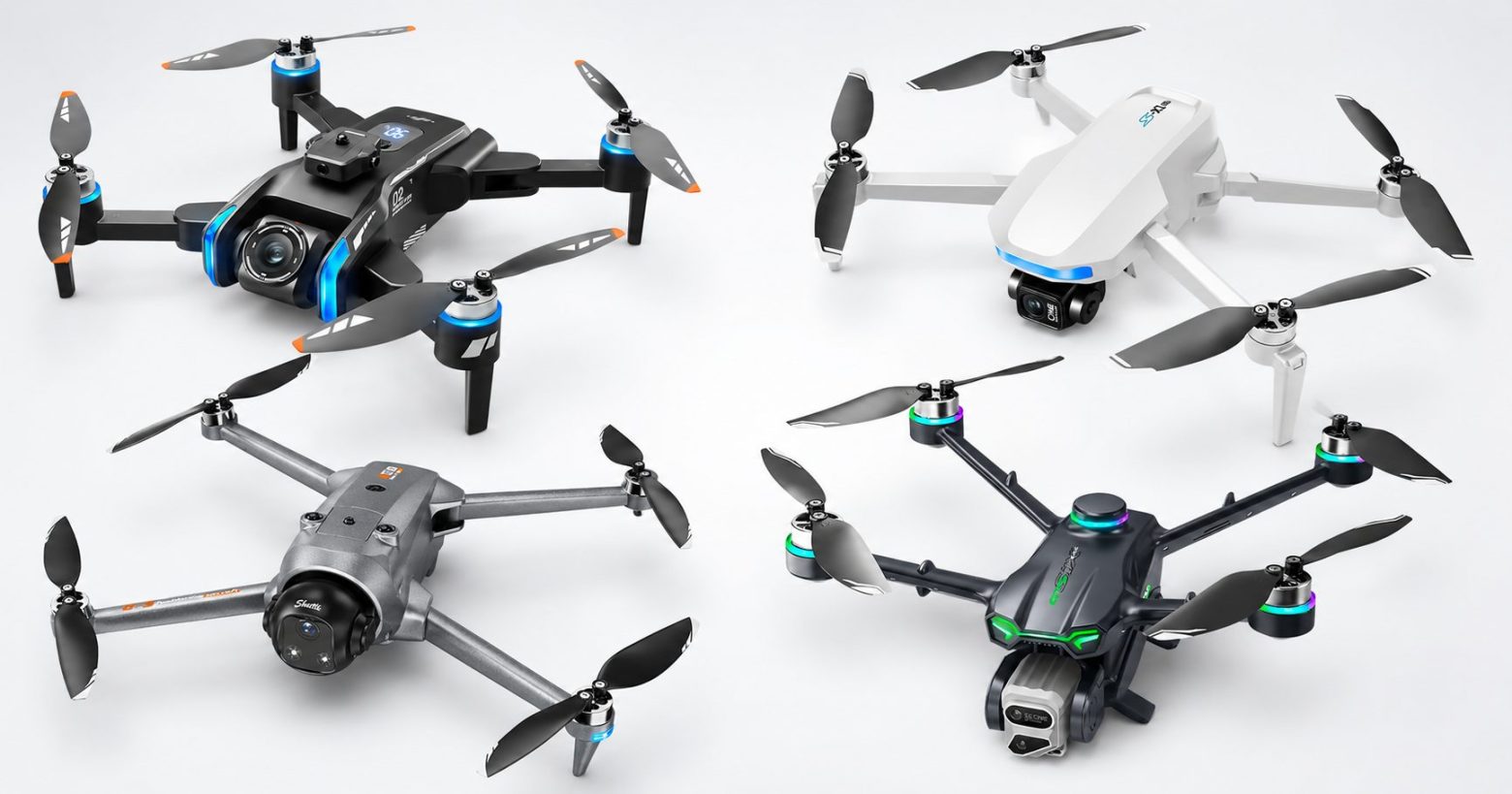
Best GPS Drones for Beginners (2026 Buyer’s Guide)
Bywpdev
If you have flown a small indoor drone and now want to fly outdoors — in parks, open fields, at the beach, or while traveling — you have probably run into the same frustrating moment. The drone drifts in the wind. It gets far enough away that you lose track of which way it is facing. And a small voice in your head asks: what if it just doesn’t come back?
That is exactly the problem a GPS drone is built to solve. For beginners stepping into outdoor flying for the first time, GPS positioning, position hold, and a return-to-home button can turn a nerve-wracking flight into a relaxed one. This guide explains what actually matters when you choose your first GPS drone, the real specifications worth comparing, and which models fit which kind of pilot — so you can buy with confidence instead of guesswork.
Quick Answer
For most beginners, the best GPS drone is the one that matches your first outdoor flying goal. Choose the GT6 if you want range and a big live-view screen, the S-X1 if smooth video matters most, the AE20 Max if you want a lightweight travel drone, the XT606 if price is the priority, and the XT808 if you want the easiest screen-remote setup.
What Is a GPS Drone (and Why Beginners Like Them Outdoors)
A GPS drone uses satellite positioning to know where it is in the world. That single capability unlocks the features outdoor beginners care about most: it can hold its position in light wind instead of drifting, it can record where it took off, and it can fly itself back to that point when you press return-to-home. A basic non-GPS drone relies on you to do all of that manually, which is fine for a living room but stressful in an open field.
This is the key difference from the smaller indoor and optical-flow drones in our Beginner Drones collection. Those are built for safe, low-altitude practice in tight spaces. GPS drones are built for the opposite environment: open sky, longer distances, and the kind of travel and scenery flying where positioning support genuinely changes the experience.
A Quick Note on Drone Weight and Rules
You will notice that many beginner-friendly GPS drones are designed to be lightweight and foldable so they are easy to carry to a park or pack for a trip. Weight can also affect the rules that apply to you, and those rules differ depending on where you live and fly. We have written a dedicated, plain-English breakdown of how the sub-250-gram threshold works and what to check before you buy in our guide on sub-250g drones and registration. If rules are a concern for you, read that first.
5 Things That Actually Matter When Choosing a GPS Drone
1. GPS Positioning and Return-to-Home
This is the main reason to choose GPS. Strong GPS positioning keeps the drone steadier in open areas, and return-to-home gives you a safety net when the drone gets far away or you lose orientation. For a first outdoor drone, treat these two as non-negotiable rather than bonus features. Keep in mind that return-to-home behavior varies by model, battery level, and signal conditions, so always read the manual before you rely on it.
2. Control Range and Transmission Distance
Two numbers, and they are not the same thing. Control range is how far the drone can fly from the remote. Transmission distance is how far away you can still receive a clear live video feed. A drone might fly farther than it can stream video, so for outdoor scenery and travel shots, the transmission number is often the one that limits how you actually use it. More range means more room to frame a shot — but as a beginner, flying within sight is always the smart habit, no matter what the spec sheet allows.
3. Flight Time
Outdoor flying eats battery faster than you expect, especially once you are recording video and fighting a little wind. A drone rated around 20–25 minutes per battery gives you real time to take off, find your shot, and land calmly. This is also why many of our GPS models are offered in two- and three-battery packages — for outdoor sessions, a spare battery is the upgrade beginners appreciate most.
4. Camera and Stabilization
Most GPS drones today shoot in 4K, so resolution alone won’t separate them. What separates smooth footage from shaky footage is stabilization. EIS (electronic image stabilization) smooths video in software. A 3-axis gimbal physically steadies the camera and produces noticeably cleaner results, especially in wind. If video quality is your main goal rather than GPS features specifically, it is worth comparing our dedicated Camera Drones collection alongside this one.
5. Screen Remote vs. Phone Control
Some GPS drones include a remote with a built-in screen, so you see the live camera view directly on the controller. Others rely on clipping your phone to the remote and running an app. For beginners, a built-in screen remote removes a setup step and a point of failure outdoors — no app login, no phone disconnects mid-flight. It is a small convenience that makes a real difference on flight day.
How Much Should a Beginner Spend on a GPS Drone?
GPS drones cost more than basic indoor toys because the positioning hardware, brushless motors, and screen remotes add real value. As a benchmark, well-known brands like DJI set the high end of the market, and their GPS models are excellent — but they are priced accordingly. The practical takeaway for a beginner is this: you do not need to spend flagship money to get GPS positioning, return-to-home, a 4K camera, and a screen remote. Our GPS lineup is built to deliver those core features at a more accessible price, with the option to add spare batteries as you grow into the hobby.
How We Test (and Why That Matters)
This guide is written by the RCDronego team. We design, manufacture, and ship these drones ourselves, and we fly them outdoors before they go in the box — over open pavement, parks, and near water, not just on a workbench. That hands-on testing is where the notes in this guide come from, and it is also why we are comfortable telling you where a model shines and where it doesn’t. The specifications below are real; the recommendations are based on flying the drones, not on copying a spec sheet.
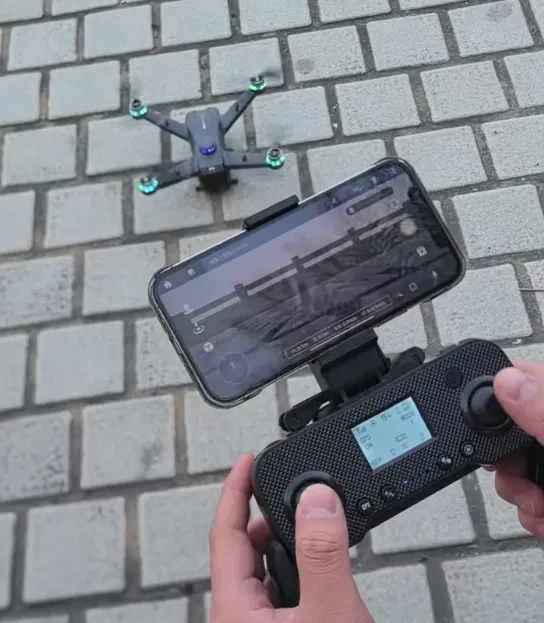
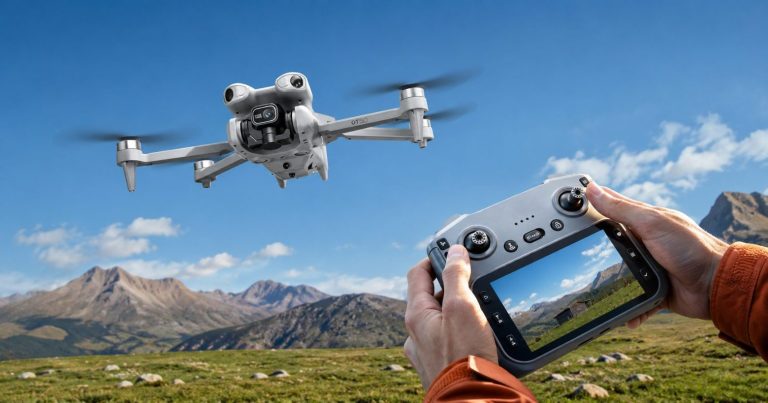
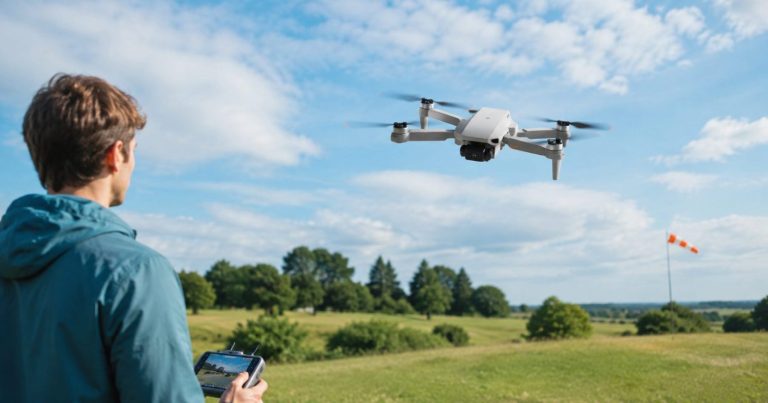
Field-testing one of our GPS drones before takeoff — live view running on the remote during a real outdoor session, not a studio render.
Our GPS Drone Picks for Beginners
Here are five GPS drones from our collection, each suited to a different kind of beginner. Every one includes GPS positioning, return-to-home, a brushless motor, a 4K camera, and a foldable body that is easy to carry outdoors. Here is how they compare at a glance (a dash means the figure is not specified for that model):
| Model | Best For | Weight | Screen Remote | Range / Transmission | Stabilization | Flight Time |
|---|---|---|---|---|---|---|
| GT6 | Range & big screen | 209 g | 5.64-inch | 2000 m / 2000 m | EIS | ~25 min |
| S-X1 | Smooth video | 237 g | Yes | — / 5000 m | 3-axis gimbal + EIS | — |
| AE20 Max | Lightweight travel | 246 g | Yes | 1000 m / 800 m | 180° adjustable lens | ~22 min |
| XT606 | Value entry point | 223 g | 4.3-inch | 500 m / 300 m | — | ~25 min |
| XT808 | Beginner-friendly setup | 227 g | 5.9-inch | — | Optical flow + GPS | — |
Best for Range and a Big Screen: GT6
If you want to fly farther and see more while you do it, the GT6 4K GPS Brushless Drone is the standout. It pairs up to 2000 m of control range with 2000 m of video transmission, so the live feed keeps up with how far it can fly. The 5.64-inch built-in screen remote is one of the largest in the lineup, the 4K camera uses EIS for smoother footage, and at 209 g it is also the lightest model here. Picture standing at the edge of an open field, watching a crisp live view on a big screen as the drone tracks a treeline in the distance — that is the GT6’s comfort zone.
Best for Smooth Video: S-X1 3-Axis Gimbal
When stable footage matters most, the S-X1 3-Axis Gimbal GPS Drone is the one to look at. Its 3-axis gimbal with EIS physically steadies the camera the way software alone cannot, and it records 4K at 50 fps over a digital transmission system rated up to 5000 m. It comes with a screen remote and your choice of black or white. If your dream is gliding, cinematic clips of coastlines and landscapes rather than maximum flight distance, the S-X1 delivers the smoothest results in this group.
Best Lightweight All-Rounder: AE20 Max
The AE20 Max GPS Camera Drone is a balanced pick for travelers. It has a 246 g takeoff weight (under 250 g), a 180° electronically adjustable lens that lets you change your shooting angle without landing, up to 1000 m of control range, around 22 minutes of flight time, and a screen remote — offered in orange or silver. It folds down small enough to drop in a day bag, making it an easy companion for trips and casual outdoor shoots where you want positioning support without carrying a large drone.
Best Value Entry Point: XT606
If you want to step into GPS flying without overspending, the XT606 4.3-Inch Screen GPS Drone is the most accessible way in. Starting around $336, it still gives you the essentials: GPS with return-to-home, a 4K front camera, a brushless motor, up to 25 minutes of flight time, and a compact 223 g foldable body with a 4.3-inch screen remote. It is a practical first choice when you want real positioning features at the most accessible price.
Best Beginner-Friendly Screen Drone: XT808
The XT808 GPS Drone is designed around making outdoor flying easy to start. It combines GPS with optical-flow positioning to help it hold steady, a large 5.9-inch screen remote so the live view is easy to read, a 180° adjustable lens, a 4K camera, and a brushless motor in a 227 g foldable body. The big screen and dual positioning support make it a reassuring first GPS drone for pilots who want as much built-in stability help as possible.
What Buyers Tell Us
One theme comes up again and again in feedback from first-time buyers: the fear of losing the drone is what holds them back, and one-key return-to-home is what finally puts them at ease. Buyers who were nervous about spending more on a drone — worried their skills wouldn’t keep up — tell us the return-to-home feature means they don’t have to worry about it flying off and not coming back. Several have also mentioned that the drone holds steady in the air rather than wobbling, which makes a real difference when you are still learning. One customer shared that their first test flight drew a small crowd at the park, with people walking over to ask where they could buy one. We hear that kind of story often, and it is a good reminder that a confidence-inspiring first drone matters more to most beginners than chasing the highest specs.
Which GPS Drone Is Right for You?
- You want maximum range and a big live screen → GT6
- You care most about smooth, cinematic video → S-X1 (3-axis gimbal)
- You want a light, foldable all-rounder for travel → AE20 Max
- You want GPS features at the lowest price → XT606
- You want the easiest, most beginner-friendly setup → XT808
Still deciding by use case rather than model? Start with where you will fly most. For open outdoor spaces and distance, prioritize range and transmission. For travel, prioritize weight and folded size. For video, prioritize stabilization. And if you are not sure you even need GPS yet, the Beginner Drones collection is the easier place to start.
Common Beginner Mistakes With GPS Drones
- Trusting return-to-home blindly. It is a safety net, not autopilot. Always keep enough battery for the trip back and read how your model behaves before you need it.
- Flying indoors and expecting GPS to work. GPS needs open sky. Indoors, signal is weak — that is what optical-flow and beginner drones are for.
- Skipping the spare battery. One 20-minute battery disappears fast outdoors. A two- or three-battery pack is the difference between one shot and a full session.
- Flying past what you can see. Just because a drone can transmit 2000 m away does not mean a beginner should. Keeping it in sight is the safest habit you can build.
GPS Drones vs. Camera Drones: What’s the Difference?
The two categories overlap, which is why beginners often confuse them. The simplest way to think about it: a GPS drone is defined by how it flies — positioning, range, and return-home for confident outdoor flight. A camera drone is defined by how it shoots — image quality and stabilization come first. Many of our GPS models are also strong camera drones, but if your priority is purely photo and video quality, compare this collection against our Camera Drones guide before deciding. Choose by your main goal: flying confidence, or image quality.
Tips for Your First GPS Flight
- Choose an open area away from trees, buildings, and people, and wait for the drone to get a solid GPS lock before taking off.
- Let it hover at a low height first and confirm it holds position before you fly higher or farther.
- Test return-to-home close and low, once, so you know how your model behaves before you rely on it at distance.
- Watch your battery and start heading back well before it runs low — give yourself a comfortable margin.
- Fly on calmer days when you are starting out; wind makes everything harder for a new pilot.
Frequently Asked Questions
The best GPS drone for a beginner depends on your priority. For the lowest price, the XT606 offers GPS, return-to-home, and a 4K camera starting around $336. For the easiest setup, the XT808 adds optical-flow positioning and a large 5.9-inch screen. For range, the GT6 reaches up to 2000 m of control and transmission. The right choice comes down to whether you value price, ease of use, range, or video quality most.
Return-to-home uses GPS to record your takeoff point and fly the drone back to it when you activate the feature or when certain conditions are met, such as a low battery or signal loss. It is a valuable safety net for beginners, but it is not full autopilot. Behavior varies by model, battery level, and signal conditions, so always read the manual and test it close to home before relying on it at a distance.
Not well. GPS needs a clear view of the sky to lock onto satellites, so signal is weak or unavailable indoors. For indoor flying, a smaller beginner drone or an optical-flow model is a better fit. GPS drones are designed for outdoor environments like parks, fields, beaches, and travel locations.
Control range is how far the drone can fly from the remote before it loses the control signal. Transmission distance is how far away you can still receive a clear live video feed. They are often different numbers, and a drone may be able to fly farther than it can stream video. For outdoor and travel shooting, transmission distance is often the more practical limit to consider.
They solve the same problem in different ways. EIS (electronic image stabilization) smooths footage in software, while a 3-axis gimbal physically steadies the camera with motors. A gimbal generally produces noticeably smoother results, especially in wind, which is why the S-X1’s 3-axis gimbal stands out for video. EIS is still effective and keeps drones lighter and more affordable.
Ready to Start Flying Outdoors?
A GPS drone is the bridge between flying in your living room and capturing the world from the sky with confidence. Whether you want range, smooth video, a travel-friendly body, or the simplest possible start, there is a model here built for it. Browse the full GPS Drones collection to compare them side by side and find your first outdoor drone.