
Sub-250g Drone, No Registration? What U.S. Buyers Need to Know
Bywpdev
A sub-250g drone is one of the most practical choices for recreational flyers who want a lighter aircraft, simpler ownership, and fewer registration concerns. But “under 250g” does not mean “no rules.” It only affects registration in specific situations.
For U.S. buyers, the key point is this: a drone under 250g usually does not need FAA registration when it is flown only for recreational purposes under the Exception for Limited Recreational Operations. If the same drone is used for Part 107, business, paid content, real estate, inspection, commercial filming, or other non-recreational work, registration is still required regardless of weight.
That distinction matters because many buyers see “sub-250g” and assume it automatically removes every legal requirement. It does not. You still need to follow airspace rules, fly safely, keep the drone within visual line of sight, understand local restrictions, and complete the required recreational safety test (TRUST) when flying for fun. If you are new to drones, our guide to the best camera drones for beginners covers how weight fits into the bigger picture of choosing your first model.
Quick Answer
A sub-250g drone can reduce registration paperwork for U.S. recreational flyers, but only when the drone is used strictly for recreation. If the drone is used under Part 107 or for any non-recreational work, it must be registered regardless of weight.
Sub-250g also does not automatically remove other responsibilities. Recreational flyers still need to understand FAA rules, take TRUST, follow airspace restrictions, and avoid unsafe flight behavior. Remote ID usually follows registration, so a recreational sub-250g drone that does not require registration usually has fewer Remote ID concerns, while Part 107 use changes the situation.
For buyers, the best sub-250g drone is not just the lightest model. It is the drone that matches how you actually plan to fly. If your budget is the main constraint, you can also compare our guide to the best camera drone under $200, since many sub-250g models fall into that price range.
Why the 250g Threshold Matters
The 250g threshold became popular because it sits at the intersection of portability, beginner convenience, and regulatory simplicity. A drone under 250g is easier to carry, easier to pack for travel, and less intimidating for new flyers.
For casual buyers, this weight class is attractive because it usually feels less like serious aviation equipment and more like a practical everyday gadget. That makes sub-250g drones popular for travel videos, family events, outdoor scenery, social media clips, hobby photography, beginner flight practice, and lightweight everyday flying.
But the weight itself is only one part of the buying decision. A drone can be under 250g and still have weak video, poor wind handling, short battery life, or a frustrating app. Buyers should use the 250g limit as a filter, not as the only reason to buy.
When a Sub-250g Drone Usually Does Not Need FAA Registration
For U.S. recreational flyers, a drone under 250g generally does not need FAA registration when it is flown only for fun under the recreational exception. That means the flight purpose matters as much as the drone’s weight.
A simple recreational example would be this: you buy a lightweight drone for family trips, weekend practice, vacation clips, or hobby flying. You are not earning money, using the footage for business, or flying for a client. In that situation, a sub-250g drone is usually the simplest ownership path.
However, “no registration” does not mean “no responsibility.” Even when registration is not required, recreational flyers must still take TRUST, follow all airspace rules, and fly safely. Note also that if you ever do need to register for recreational use, FAA registration under the recreational exception costs $5, covers every drone you own, and is valid for three years.
When Registration Is Still Required
Registration can still be required even when the drone weighs less than 250g. Use this table as a simple guide:
| Use Case | Drone Weight | FAA Registration? | Why |
|---|---|---|---|
| Recreational flying only | Under 250g | Usually no | Recreational sub-250g drones are generally registration-exempt |
| Recreational flying only | 250g or more | Yes | Recreational drones at or above the threshold must be registered |
| Part 107 / commercial use | Under 250g | Yes | Part 107 drones must be registered regardless of weight |
| Part 107 / commercial use | 250g or more | Yes | Commercial use requires registration |
| Paid content creation | Any weight | Yes | The purpose is not purely recreational |
| Real estate, inspection, business video | Any weight | Yes | These are non-recreational uses |
The easiest way to think about it is this: weight affects recreational registration, but purpose determines which rule framework applies. If you buy a sub-250g drone for fun, registration may not be needed. If you later use the same drone for paid work or business content, the requirement changes. One important detail: a drone registered under the recreational exception cannot be flown under Part 107, because registration type cannot be transferred between the two.
Remote ID and Sub-250g Drones
Many buyers ask whether a sub-250g drone needs Remote ID. The answer depends on registration and use case.
In general, Remote ID applies to drones that are registered or required to be registered. That means a recreational sub-250g drone that does not require registration usually has fewer Remote ID concerns. But if the same drone is used under Part 107, registration is required, and Remote ID requirements may apply. It is also worth noting that some premium sub-250g drones ship with built-in Remote ID anyway, so if Remote ID matters for your situation, check the model’s specs before buying.
This is why buyers should not rely only on product weight. Before flying, ask yourself: Am I flying only for recreation? Is this flight connected to work, business, or paid content? Does this drone need to be registered? Does the model have built-in Remote ID? Am I flying in an area where special airspace rules apply? A sub-250g drone can simplify ownership, but it does not replace the need to understand the rules.
A Note on TRUST: Required No Matter the Weight
One rule catches many new buyers by surprise: TRUST (The Recreational UAS Safety Test) is mandatory for every recreational flyer, regardless of drone weight. There is no sub-250g exemption for TRUST. Even if your drone is light enough to skip registration, flying recreationally without passing TRUST is a violation of FAA rules.
The good news is that TRUST is free, online, and takes most people 20 to 30 minutes. You work through the material, correct any wrong answers before moving on, and download a completion certificate at the end. Carry proof of completion — a screenshot on your phone counts — whenever you fly. It is the single easiest box to check before your first flight, and it applies to even the lightest drone in this guide.
Who Should Buy a Sub-250g Drone?
A sub-250g drone is a strong fit for buyers who value convenience, portability, and simple recreational ownership. It is especially suitable for first-time drone buyers, travel users, casual photographers, family video users, recreational hobby flyers, people who want a lightweight everyday drone, and buyers who do not want a large drone platform.
This category is also useful for people who are unsure whether they will fly often. A lighter drone is easier to carry, easier to store, and more likely to be used regularly. For first-time pilots, weight is only one part of the decision — a beginner should also compare hover stability, propeller protection, easy controls, and safe flight behavior. If ease of control is your main concern, look for a beginner-friendly model rather than choosing by weight alone.
What Sub-250g Drones Are Good At
Sub-250g drones are best when the buyer wants practical everyday use rather than maximum professional performance. They are good for short travel videos, social media clips, beginner practice, scenic outdoor shots, lightweight packing, casual aerial photography, and quick weekend flights.
They are not always the best choice for strong wind, heavy accessories, professional filming, long-range operations, large camera sensors, commercial work without registration, or high-end cinematic production. A lightweight drone is easier to carry, but lighter aircraft can also be more affected by wind. Buyers should not assume that sub-250g automatically means better flight performance.
What to Check Before Buying
1. Actual Takeoff Weight
Do not only read the product title. Check the actual takeoff weight with the battery, propellers, memory card, and any accessories installed. Some drones stay under 250g only with the standard battery. Adding a larger battery, propeller guards, lights, landing gear, or extra accessories may increase the takeoff weight. If the drone goes above the threshold, registration rules may change for recreational use.
2. Flight Purpose
Before buying, decide whether the drone is for recreation or non-recreational use. A drone used for vacation clips, hobby practice, and family videos is different from a drone used for real estate, paid social media work, business marketing, inspections, or client projects. The same drone can fall under different rules depending on how it is used.
3. Camera Quality
Do not judge camera quality only by resolution. A drone may advertise 4K, but usable footage depends on stabilization, sensor quality, lens angle, image processing, wind handling, and how steady the drone can remain while recording. If your main goal is better aerial photos and video, compare camera performance before choosing by weight alone. The RCDronego Camera Drones collection is a natural place to compare camera-focused models.
4. GPS and Return Support
GPS can make outdoor flying more predictable. It helps with positioning, return support, and more stable outdoor operation. For outdoor beginners, GPS may matter more than the lowest possible weight. A lightweight drone without reliable positioning can still feel stressful in open areas. If you plan to fly mostly outdoors, compare GPS features and return behavior before making a final choice.
5. Battery Life
A longer flight time gives you more chances to capture usable footage and practice safely. But listed flight time is usually measured in ideal conditions. Wind, speed, recording, temperature, and battery age can reduce real-world flight time. For most buyers, extra batteries are more useful than one impressive advertised flight-time number.
6. Wind Resistance
Lighter drones are easier to carry, but they can be more sensitive to wind. If you plan to fly near beaches, lakes, hills, open fields, or travel destinations, wind handling becomes important. A sub-250g drone is convenient, but it should still feel controlled and predictable outdoors.
7. App and Controller Experience
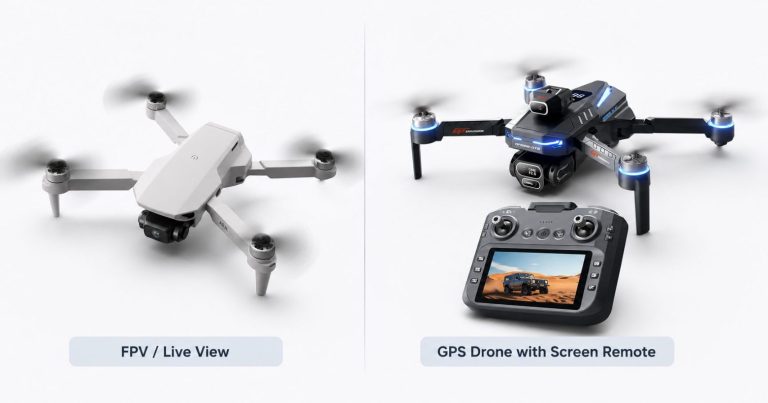
A smooth controller and app experience can matter as much as the camera. If the app is difficult, the connection is unstable, or the live view is delayed, the drone may become frustrating quickly. Before buying, check whether the drone uses phone-only control, a standard remote controller, a screen remote, app-based live view, GPS map support, or simple one-key controls. The best setup depends on how comfortable you are with flying.
Market Benchmarks to Compare
This article should not be treated as a simple brand ranking. Instead, use well-known models as market benchmarks to understand what different sub-250g categories offer.
Premium Benchmark: DJI Mini 4 Pro
The DJI Mini 4 Pro is a premium benchmark in the sub-250g category. It is known for strong imaging features, compact size, advanced obstacle sensing, and high-end camera performance in a lightweight body. This type of drone is best for buyers who want the strongest lightweight camera platform and are willing to pay more for better imaging, flight features, and overall reliability. It is not the best fit for every buyer — many first-time users do not need a premium model if their goal is casual practice or simple travel clips.
Value GPS Benchmark: Potensic ATOM SE
The Potensic ATOM SE is a useful value benchmark because it combines a sub-250g foldable design with GPS support, 4K video, and practical flight-time positioning. This type of drone is a better comparison point for buyers who want outdoor flying, GPS support, and travel portability without moving into a premium price range. Buyers should still check current pricing, package contents, controller options, battery count, and return policy before choosing.
RCDronego Sub-250g Options
If you would rather compare models directly from our own lineup, two RCDronego drones are built to stay under the 250g threshold. The 143g Brushless Optical Flow Drone is, as the name says, well under the limit at 143 grams, with a propeller guard and screen remote that make it a forgiving choice for recreational practice. The GT50 is a sub-250g 4K option for buyers who want a more camera-focused lightweight drone. Both are designed for the recreational, travel-friendly use case this guide describes — but as always, confirm the actual takeoff weight with your chosen battery and accessories before you fly.
Choose by Need, Not Just by Weight
For RCDronego buyers, the better question is not “Which famous model is best?” The better question is: What kind of lightweight drone fits my use case?
| Buyer Need | Better Starting Point | Why |
|---|---|---|
| First drone for learning | Beginner-friendly drone | Easier controls and safer practice matter most |
| Travel photos and video | Camera drone | Image quality and portability matter most |
| Outdoor flying | GPS drone | Positioning and return support matter most |
| Simple family use | Lightweight beginner drone | Easy setup and predictable control matter most |
| Social media clips | Camera-focused drone | Usable footage matters more than raw specs |
Common Mistakes to Avoid
Mistake 1: Thinking Sub-250g Means No Rules
Sub-250g only affects registration in specific recreational situations. It does not remove airspace rules, safety rules, TRUST requirements, or Part 107 obligations.
Mistake 2: Ignoring Flight Purpose
The same drone may be registration-exempt for recreation but require registration for commercial or business use. Always decide how you will use the drone before relying on the weight exemption.
Mistake 3: Adding Accessories Without Checking Weight
Propeller guards, larger batteries, lights, landing gear, or other accessories can push the drone above 250g. If that happens, the registration situation may change.
Mistake 4: Buying Only by Camera Resolution
A 4K label does not guarantee smooth video. Stabilization, hover control, app quality, and flight stability are just as important.
Mistake 5: Choosing a Drone That Is Too Advanced
A premium drone can be powerful, but beginners may prefer a simpler drone that is easier to fly. The best first drone is the one that helps you build confidence.
Buyer Summary Table
| Buyer Type | What to Prioritize | Best Direction |
|---|---|---|
| Recreational beginner | Easy control, stable hover, simple setup | Beginner-friendly sub-250g drone |
| Travel buyer | Foldable body, battery life, portability | Lightweight camera drone |
| Outdoor flyer | GPS, return support, wind handling | Sub-250g GPS drone |
| Camera-focused user | Stabilization, image quality, live view | Camera drone |
| Gift buyer | Safety, simple controls, durable design | Beginner drone |
| Future commercial user | Registration, Remote ID, Part 107 planning | Do not rely only on sub-250g exemption |
Final Purchase Advice
A sub-250g drone is a smart choice for many U.S. recreational buyers because it can make ownership simpler and travel easier. But it should not be treated as a shortcut around all drone rules.
Before buying, decide your flight purpose first. If the drone is strictly for recreational flying, sub-250g may reduce registration concerns. If the drone will be used for business, paid content, real estate, inspections, or any Part 107 purpose, registration is still part of the process.
The smartest purchase is not always the lightest drone — it is the drone that matches your actual flying style. Choose a beginner-friendly model if you are learning. Choose a camera-focused model if footage matters most. Choose a GPS drone if outdoor positioning and return support are important. Use the 250g threshold as a helpful filter, but do not let it replace a real buying decision. For a broader overview of choosing your first model, see our complete beginner camera drone guide.
Frequently Asked Questions
In the U.S., a drone under 250g usually does not need FAA registration when it is flown only for recreation under the recreational exception. If it is used under Part 107 or for non-recreational purposes, registration is required regardless of weight.
No. Sub-250g does not mean you can fly anywhere. You still need to follow airspace rules, avoid restricted areas, stay below 400 feet in uncontrolled airspace, fly within visual line of sight, and understand local requirements.
Yes. TRUST is mandatory for all recreational flyers in the U.S. regardless of drone weight. There is no sub-250g exemption. The test is free, takes about 20 to 30 minutes online, and you must carry proof of completion when flying.
A recreational sub-250g drone that does not require registration usually has fewer Remote ID concerns. If the drone is registered or required to be registered, Remote ID requirements may apply. Some premium sub-250g drones include built-in Remote ID anyway, so check the model’s specs.
If accessories increase the takeoff weight to 250g or more, recreational registration may be required. Always check the actual takeoff weight with the battery and accessories installed, not just the weight listed in the product title.
FAA registration under the Exception for Limited Recreational Operations costs $5, covers all the drones you own, and is valid for three years. You only need it if your drone weighs 250g or more, or if you fly for non-recreational purposes.
Yes, a sub-250g drone can be a good beginner choice because it is lightweight and easier to carry. However, beginners should also compare stable hover, easy controls, propeller protection, and app experience rather than choosing by weight alone.
Choose a sub-250g drone if portability, recreational simplicity, and easy travel matter most. Choose a larger drone if you need stronger wind handling, heavier payloads, or more advanced professional performance.