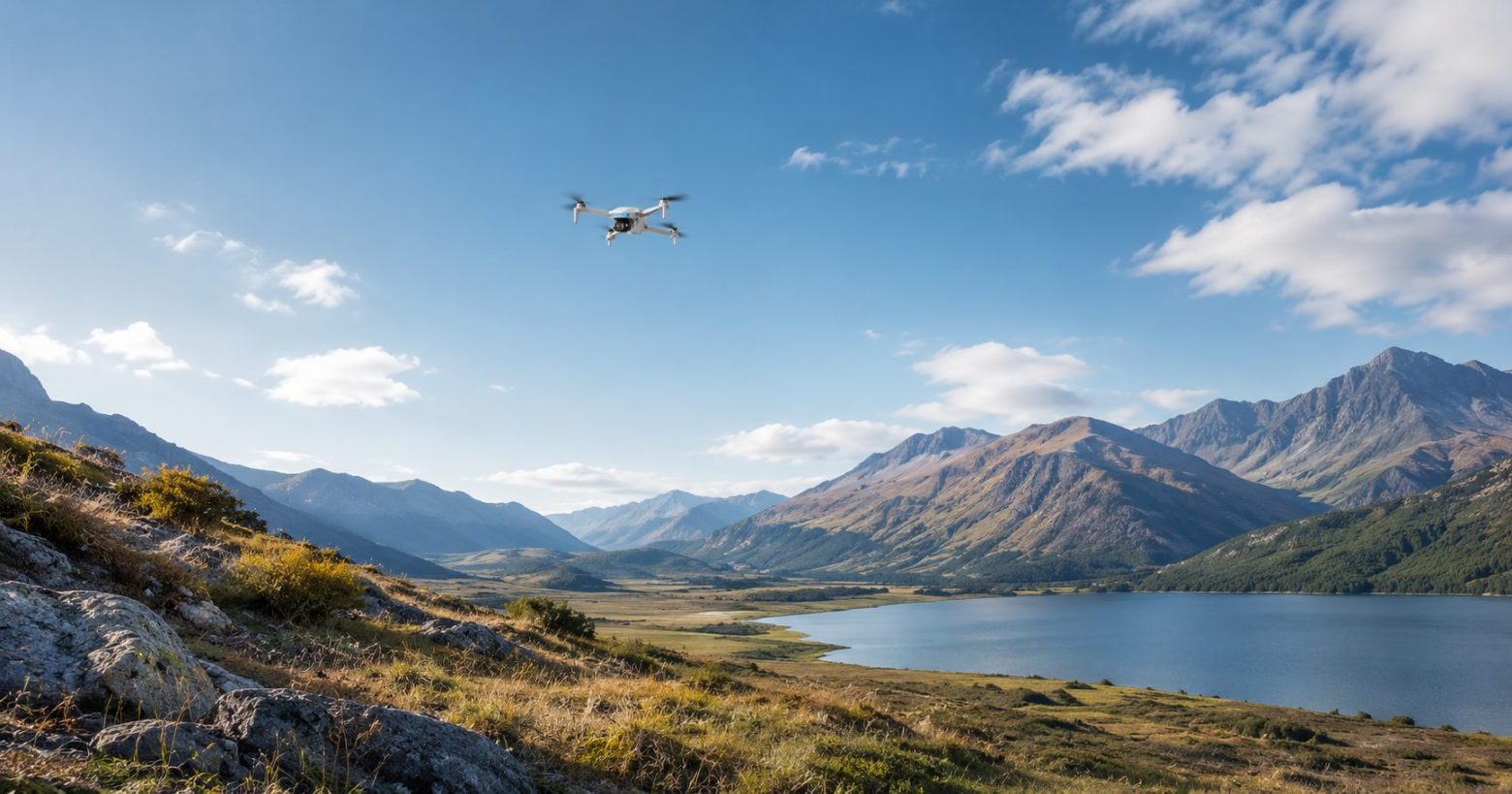
How Far Can a GPS Drone Fly? Range Guide for Beginners
Bywpdev
“How far can it fly?” is one of the first questions every new drone buyer asks — and it is also one of the most misunderstood. The range number on the box (“up to 5000 m!”) is real, but it almost never means what beginners think it means. It is not how far you should fly, it is not always how far you can see the video, and in most places it is not even legal to fly that far.
This guide breaks down what drone range numbers actually mean, the difference between control range and transmission distance, what reduces your real-world range, and how far a beginner should genuinely fly — which is a very different number from the one on the spec sheet.
Quick Answer
A GPS drone’s range is described by two numbers: control range (how far it can fly from the remote) and transmission distance (how far it can still send back a clear live video feed). Affordable beginner GPS drones typically range from a few hundred meters to a couple of kilometers, while some reach up to 5000 m for video transmission in ideal conditions. But real-world range is always shorter, and in the U.S., recreational flyers are required to keep the drone within visual line of sight (or use a co-located visual observer) — which is usually far closer than the maximum number on the box. Rules vary by country, so always check local requirements.
| Range Term | What It Means | Why Beginners Should Care |
|---|---|---|
| Control range | How far the drone can fly and still respond to the remote | Losing it may trigger return-to-home |
| Transmission distance | How far the live video stays clear on your screen | This is often the real shooting limit |
| Visual line of sight | How far you can clearly see the drone with your own eyes | This is usually the safest — and legal — beginner limit |
Control Range vs. Transmission Distance (They’re Not the Same)
This is the single most important thing to understand about drone range, and most spec sheets blur the two together. They are different numbers, and they limit you in different ways.
- Control range is how far the drone can travel from the remote before it stops responding to your sticks. Push past it and the drone loses control signal (which is usually when return-to-home kicks in).
- Transmission distance is how far away the drone can still send a clear live video feed back to your screen or phone. Push past it and the picture freezes or drops — even if the drone is still flying fine.
Here’s why it matters: a drone can often fly farther than it can stream video. The moment your live feed cuts out, you are effectively flying blind — and for a beginner, that is the practical limit, not the control range. When you compare models, the transmission number is usually the one that defines how you can actually use the drone for photos and video.
How Far Do Real GPS Drones Actually Fly?
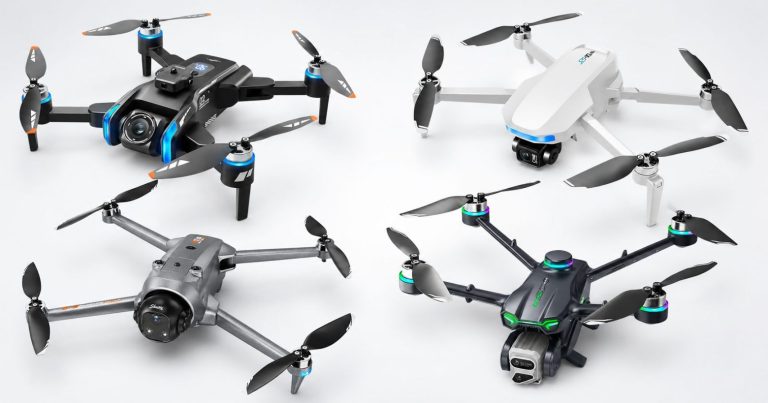
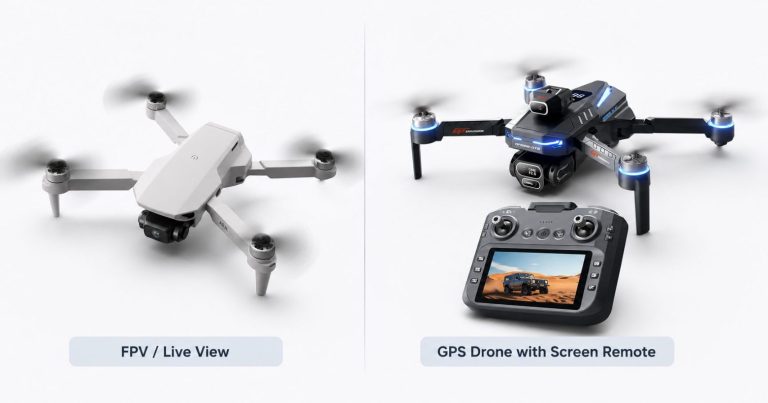
Range varies a lot by model and price. To make it concrete, here are the rated control and transmission figures from a few GPS drones in our own lineup, so you can see the spread from entry-level to longer-range (a dash means the figure isn’t specified for that model):
| Model | Control Range | Transmission Distance | Best For |
|---|---|---|---|
| XT606 | 500 m | 300 m | Value entry point, shorter-range outdoor flying |
| AE20 Max | 1000 m | 800 m | Lightweight travel flying |
| GT6 | 2000 m | 2000 m | Longer range with a matching live feed |
| S-X1 | — | 5000 m | Maximum transmission distance for video |
Notice how the GT6’s control and transmission numbers match at 2000 m — meaning the live feed keeps up with how far it can fly — while a cheaper model like the XT606 has a shorter transmission distance than its control range. That gap is exactly the kind of detail worth checking before you buy. You can see how all of these compare side by side in our guide to the best GPS drones for beginners.
What Reduces Your Real-World Range
The number on the box is measured in ideal conditions — open space, no interference, a fresh battery. Your actual range outdoors is almost always shorter, because of factors like these:
- Interference. Buildings, other Wi-Fi signals, power lines, and even crowds of phones can weaken the connection and cut range well before the rated maximum.
- Wind. Flying out is easy with the wind behind you; flying back against it drains battery fast and shortens how far you can safely go.
- Battery. Range and flight time are linked — every meter you fly out is a meter you have to fly back. Real usable range is roughly half of how far the battery could take you in one direction.
- Obstacles between you and the drone. A clear line of sight gives the best signal. Put a building or hill between you and the drone and both control and video can drop sharply.
- Weather and temperature. Cold weather reduces battery performance, which shortens both flight time and effective range.
How Far Should a Beginner Actually Fly?
Here is the part that matters most, and it has nothing to do with the spec sheet: how far you should fly is almost always far less than how far you can.
In the U.S., recreational flyers are required to keep the drone within visual line of sight — meaning you can see it with your own eyes, not just through the camera — or use a visual observer who is co-located and in direct communication with you. Rules vary by country, so always check your local requirements before flying. Once a drone is a few hundred meters away, it becomes a hard-to-see dot in the sky, and orientation gets confusing fast. So the practical limit for a beginner is usually “as far as I can clearly see it and still tell which way it’s facing,” which is often well under the drone’s rated range.
This is also where a GPS drone earns its place. Even when you stay close and within sight, GPS positioning keeps the drone steady, and return-to-home gives you a safety net if it drifts farther than you intended. If you want to understand that safety net in detail, see our guide on how GPS drone return-to-home works. Range gives you room; staying within sight keeps you safe.
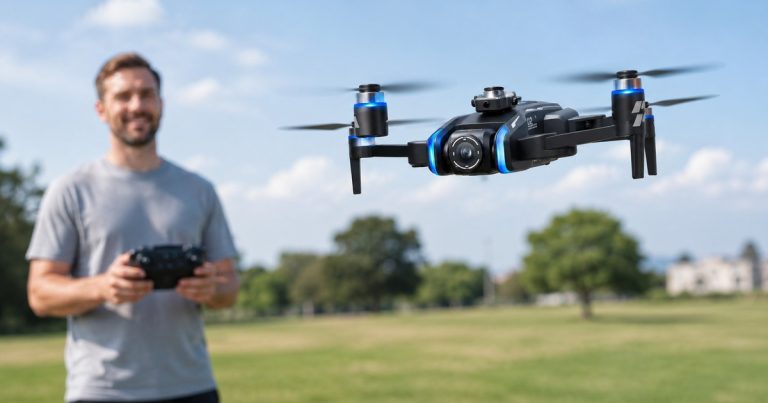
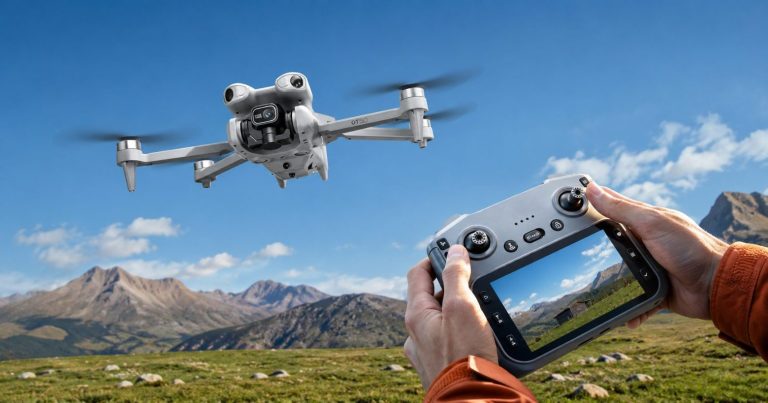
We fly each model outdoors before recommending it to beginners, and in practice the most enjoyable flying happens well within range — close enough to keep the drone in clear view, frame your shots, and stay relaxed. The clip below is from one of our outdoor sessions.
Do You Need a Long-Range Drone as a Beginner?
For most first-time pilots, the honest answer is no. Because you should be flying within line of sight anyway, a drone rated at 500–1000 m already gives you more range than you will safely use while you are learning. A model like the XT606 covers that comfortably at an accessible price.
Longer range becomes genuinely useful once you have experience and want more room to frame distant scenery, or you want the reassurance that the live feed stays strong well past where you fly. That is when a higher transmission distance pays off. But buying maximum range on day one mostly buys you a number you cannot legally or safely use yet. Start with a model that fits how you will actually fly, and browse the full GPS Drones collection when you are ready to compare.
Frequently Asked Questions
It depends on the model. Affordable beginner GPS drones typically have a control range from a few hundred meters to around 2000 m, while some reach up to 5000 m for video transmission in ideal conditions. However, real-world range is always shorter due to interference, wind, and battery limits, and in most places you are legally required to keep the drone within your line of sight, which is usually much closer than the maximum.
Control range is how far the drone can fly from the remote before it loses control signal. Transmission distance is how far it can still send a clear live video feed back to your screen. They are often different numbers, and a drone can frequently fly farther than it can stream video. For shooting photos and video, the transmission distance is usually the more practical limit.
Advertised range is measured in ideal conditions: open space, no interference, and a full battery. In the real world, buildings and other signals cause interference, wind drains the battery on the way back, obstacles block the line of sight, and cold weather reduces battery performance. All of these shorten your effective range compared to the number on the box.
Far less than the maximum range. In the U.S., recreational flyers are required to keep the drone within visual line of sight — close enough to see it with your own eyes and tell which way it is facing — or use a co-located visual observer. Rules vary by country, so check your local requirements. Since a drone becomes a hard-to-see dot after a few hundred meters, beginners should stay well within that distance, which is usually much closer than the drone’s rated range.
Usually not. Because you should fly within line of sight while learning, a drone rated at 500 to 1000 m already offers more range than you will safely use. Longer range becomes useful later, when you have experience and want a stronger live feed or more room to frame distant scenery. For most beginners, a mid-range model is the better value.
The Bottom Line
Drone range is two numbers, not one — control range and transmission distance — and the real-world version of both is always shorter than the box promises. As a beginner, the smartest approach is to ignore the chase for the biggest number and instead fly within sight, keep enough battery for the trip back, and let GPS and return-to-home do their job. A mid-range GPS drone gives you all the room you need to learn, and you can always grow into more range later. Range is a comfort margin, not a goal to chase.