Best Drone for Travel and Vlogging: Beginner Picks
Bywpdev
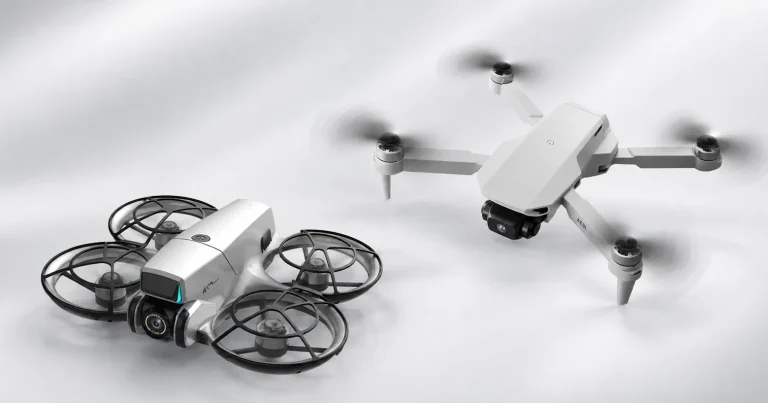
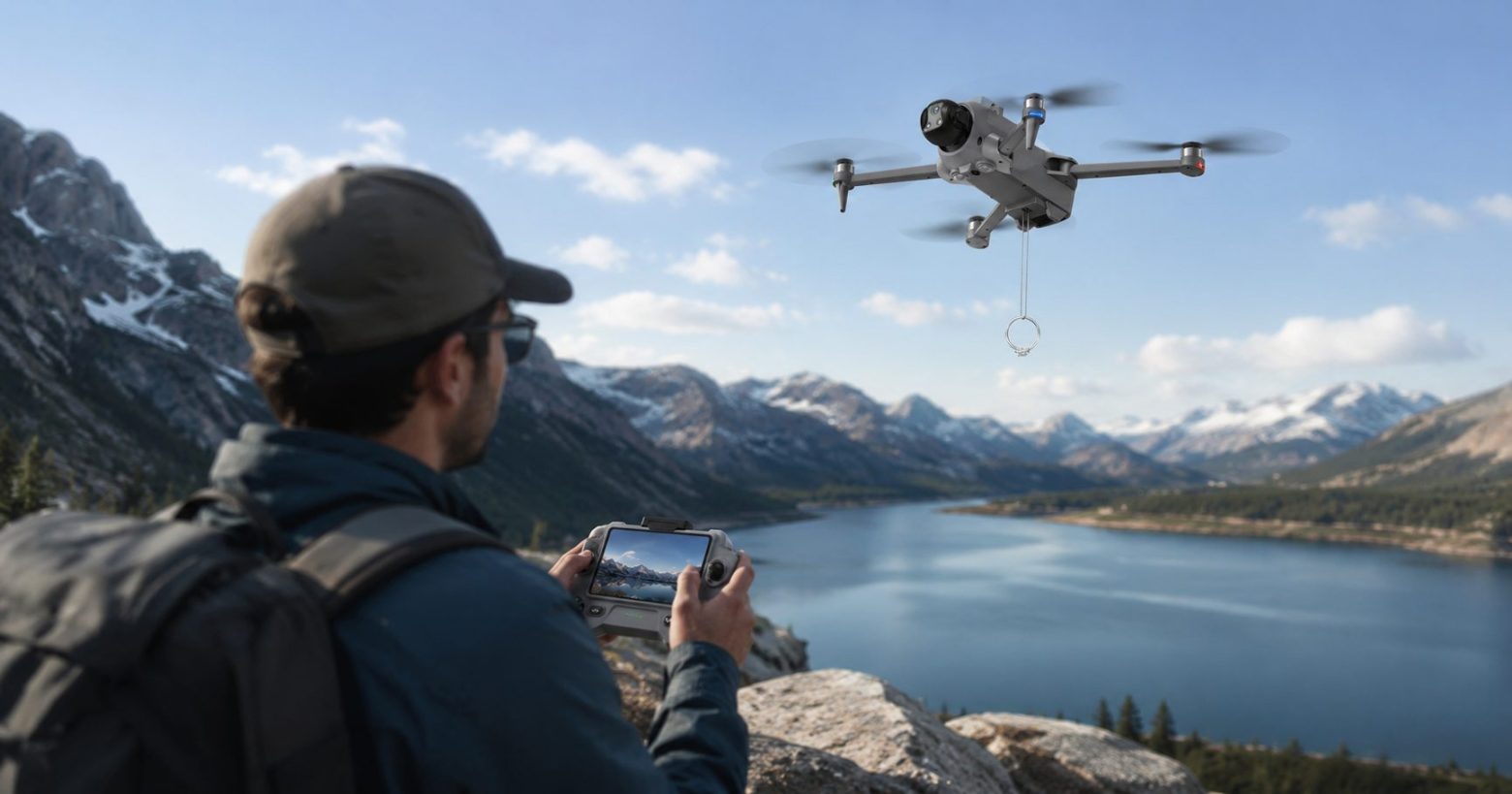
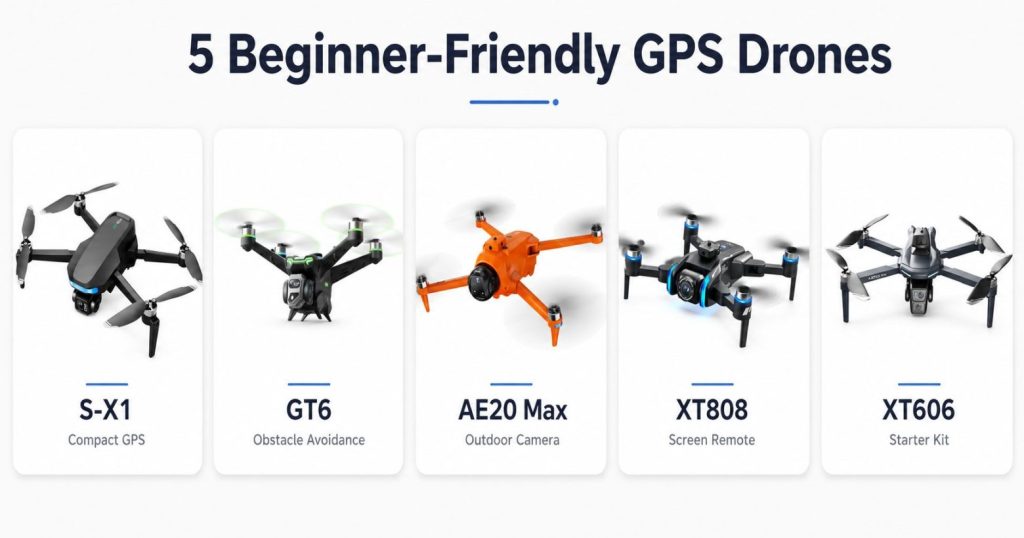
The best drone for travel and vlogging depends on what matters most during the trip. Choose the S-X1 when smoother 4K footage and a 3-axis gimbal are the priority. Choose the GT6 for a lighter, balanced GPS setup with EIS, a built-in screen, and longer listed flight time. Choose the AE20 Max when an adjustable 180-degree camera angle matters more than advanced stabilization. XT808 is the large-screen option, while XT606 is the lower-priced GPS choice for beginners. Every model discussed here is foldable and weighs less than 250 grams, but their camera systems, screen sizes, listed distances, and travel roles are different.
Choosing the best drone for travel and vlogging is not the same as choosing the drone with the longest specification list. A travel drone has to fit into a real trip: it must be practical to pack, quick to set up, easy to frame outdoors, and capable of recording useful footage before the battery runs low.
Vlogging adds another requirement. The drone is not only there for recreational flying. It must produce aerial clips that fit naturally into a travel story: an opening view of the destination, a slow reveal of a landscape, a road or shoreline from above, or a short establishing shot before the vlog returns to a handheld camera.
This guide compares the confirmed RCDronego models by the needs that matter during an actual trip: folded portability, aircraft weight, screen-remote convenience, GPS support, camera stabilization, adjustable shooting angles, listed flight time, and the type of footage each model is best suited to capture.
Travel and Vlogging Put Different Demands on a Camera Drone
A drone can be easy to carry without being the strongest vlogging tool. It can also have a better camera system but require a larger budget, more batteries, and more careful flight planning. That is why travel convenience and vlog image quality should be judged separately before choosing a model.
| Travel Need | Drone Feature That Matters | Why It Affects the Trip |
|---|---|---|
| Carry the drone in a daypack | Foldable body and lower weight | Reduces the space taken by the aircraft and leaves room for batteries, a remote, and personal gear |
| Record usable vlog footage | Gimbal, EIS, or controlled camera angle | Reduces shake or makes aerial framing easier |
| Set up quickly at a viewpoint | Built-in screen remote | Avoids mounting a phone and reduces dependence on a separate app display |
| Fly confidently outdoors | GPS positioning and return support | Helps maintain position and provides a recovery function on supported models |
| Capture more than one scene | Practical flight time and spare batteries | Creates enough time for repeated takes instead of one rushed flight |
| Change from horizon to overhead views | Adjustable camera angle | Allows more variety without manually repositioning the camera before every shot |
A traveler who wants two or three short aerial clips per destination may not need the most advanced camera system. A creator building a full travel vlog may place much more value on gimbal stabilization, clean live view, repeatable framing, and enough battery capacity to record a second take.
The Travel-Bag Test: Foldable Weight, Screen Remote, and Battery Space
Aircraft weight is only one part of travel portability. The complete kit also includes the screen remote, charging cable, spare batteries, replacement propellers, memory storage, and a protective case. A lightweight drone can still become inconvenient if the complete package is poorly organized.
All five primary GPS models in this guide are listed below 250 grams and use foldable bodies. Within that group, GT6 is the lightest at 209 grams, followed by XT606 at 223 grams, XT808 at 227 grams, S-X1 at 237 grams, and AE20 Max at 246 grams.
The weight difference between these aircraft is relatively small in a backpack. The controller may make a more noticeable difference. A built-in screen remote is convenient because it does not require the traveler’s phone for the main live view, but a larger display also creates a larger controller to protect and carry.
- GT6: 209g aircraft with a 5.64-inch screen remote.
- XT606: 223g aircraft with a smaller 4.3-inch screen remote.
- XT808: 227g aircraft with the largest confirmed screen in this group at 5.9 inches.
- S-X1: 237g aircraft with a screen remote and a camera system built around a 3-axis gimbal.
- AE20 Max: 246g aircraft with a screen remote and an adjustable 180-degree camera design.
Travel decision: Choose a smaller controller when minimum bag space matters. Choose a larger screen when outdoor framing and a more comfortable live view matter more than the smallest possible kit.
Battery package selection also changes the travel experience. One battery may be enough for a short first flight, but it gives little room for repeated framing, wind-related delays, or a second location. Two or three batteries are more practical for a day trip, although package contents and pricing should be confirmed on the selected product page.
The Vlogging Test: 4K, EIS, Gimbal, and Adjustable Camera Angles
For travel vlogging, the resolution label should not be evaluated by itself. The more useful question is whether the camera system can produce a stable, correctly framed clip that fits into the finished video.
S-X1 has the strongest confirmed stabilization package in the current lineup. Its provided specifications include 4K recording at 50 fps, a 3-axis gimbal, and EIS. This combination gives it the clearest role for creators who want smoother aerial B-roll and more controlled camera movement.
GT6 uses a different approach. It is listed with 4K and EIS but does not have the same confirmed 3-axis gimbal configuration as S-X1. It is a lighter, less expensive travel option for users who want electronic stabilization and GPS features without moving into the highest price position.
AE20 Max and XT808 emphasize framing flexibility. Their 180-degree adjustable camera designs can support forward views, angled landscape shots, and downward perspectives. That can be useful when a travel vlog needs several visual angles, although an adjustable lens should not be treated as equivalent to a 3-axis stabilizing gimbal.
| Camera Need | Best-Matched Feature | Relevant Model |
|---|---|---|
| Smoother motion for planned vlog footage | 3-axis gimbal plus EIS | S-X1 |
| Balanced 4K travel clips with a lighter aircraft | 4K plus EIS | GT6 |
| Switch between forward and downward framing | 180-degree adjustable camera | AE20 Max or XT808 |
| Lower-priced aerial establishing shots | 4K front camera with GPS support | XT606 |
| Large controller view for composition | 5.9-inch built-in screen | XT808 |
None of these specifications guarantees cinematic footage. Wind, flight speed, abrupt turns, lighting, camera exposure, and pilot input still influence the final result. Beginners should use slow movements and repeat simple shots rather than relying on resolution alone.
For a step-by-step shooting workflow, use our guide on how to shoot cinematic drone video rather than turning this buying guide into a complete filming tutorial.
The Outdoor Confidence Test: GPS, Return-to-Home, and Live View
Travel locations are unfamiliar. The pilot may be flying near a new shoreline, field, overlook, or mountain road without knowing the area as well as a local practice site. GPS support and a clear live view can reduce the amount of attention spent correcting drift or struggling to see the composition.
GPS positioning helps a supported drone maintain its location outdoors, while return-to-home provides a recovery function when activated under the conditions supported by the model. Return-to-home should be understood before the trip rather than tested for the first time beside a lake or cliff.
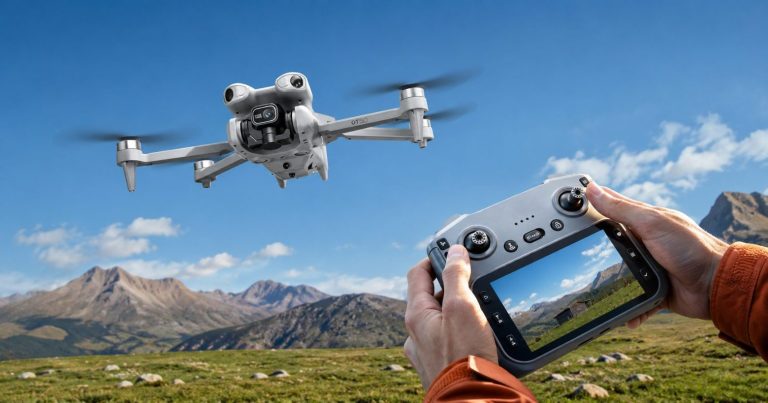
A built-in screen remote can also simplify travel use. It keeps the main flight display separate from the traveler’s phone, which may already be needed for maps, communication, hotel information, transportation, and handheld vlog recording.
- Wait for confirmed GPS positioning: Do not begin a longer outdoor shot before the drone has established the supported home-point behavior.
- Check the live view before takeoff: Confirm that the camera angle and display brightness are suitable for the scene.
- Do not use listed maximum distance as a filming target: Most travel B-roll can be recorded much closer to the pilot.
- Leave battery margin: End the shot before the battery becomes a recovery problem.
- Keep the aircraft visible: A live screen is a framing aid, not a reason to ignore the drone’s location.
Travel safety boundary: Weather, restricted airspace, crowds, private-property rules, and local flight requirements vary by destination. Confirm the rules for the exact location before unpacking the drone. A small foldable aircraft is still an aircraft.
Best Drone Picks for Different Travel and Vlogging Styles
There is no single winner for every traveler. The strongest choice depends on whether the trip is centered on smoother footage, lighter packing, adjustable framing, controller visibility, or a lower starting budget.
Best for Smoother Travel Vlogs: S-X1
The S-X1 is the strongest vlogging-focused choice in the confirmed RCDronego lineup. Its 4K recording at 50 fps, 3-axis gimbal, EIS, digital video transmission, screen remote, and foldable 237g body give it the most complete camera-stability package in this comparison.
It is the logical pick for travelers who plan their aerial footage rather than recording only one casual clip. The gimbal is useful for slow reveals, forward glides, coastline passes, and establishing shots where visible shake would make the footage harder to use.
- Starting price: Approximately $538 at the time of writing.
- Aircraft weight: 237g.
- Camera: 4K at 50 fps.
- Stabilization: 3-axis gimbal plus EIS.
- Live view: Screen remote with digital transmission.
- Listed video transmission: Up to 5000m under stated conditions.
- Control distance: To Be Confirmed.
The listed transmission distance is not a beginner flight goal. For travel vlogging, the main reason to choose S-X1 is the camera and stabilization package, not the longest possible distance from the pilot.
Best Balanced Travel Pick: GT6
The GT6 offers the most balanced combination of aircraft weight, screen size, listed flight time, GPS support, and EIS. At 209g, it is the lightest of the five main GPS models compared here, while still including a 5.64-inch screen remote.
GT6 is better suited to travelers who want a capable all-around setup rather than the highest camera-stabilization tier. Its approximately 25-minute listed flight time gives more room for repeated takes, and the screen remote creates a self-contained outdoor setup.
- Starting price: Approximately $388 at the time of writing.
- Aircraft weight: 209g.
- Camera: 4K with EIS.
- Remote: 5.64-inch built-in screen.
- Listed flight time: Approximately 25 minutes.
- Listed control distance: Up to 2000m under stated conditions.
- Listed video transmission: Up to 2000m under stated conditions.
- Positioning: GPS plus optical flow.
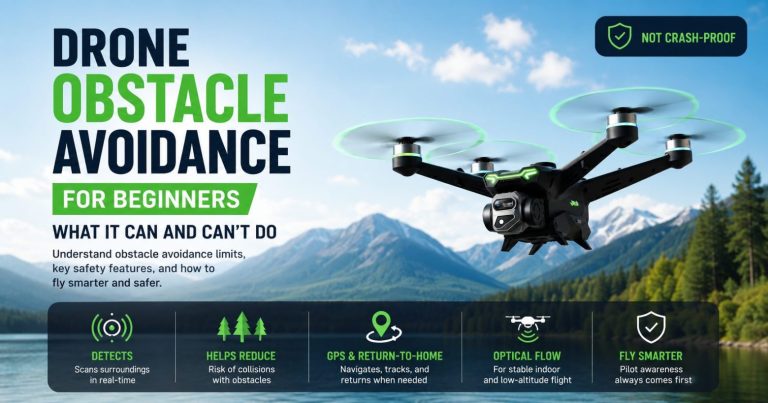
GT6 may be offered with an optional obstacle-avoidance head. That accessory must be confirmed in the selected package before ordering. Obstacle assistance is not crash-proof and may still have difficulty with thin branches, wires, glass, reflections, side obstacles, and fast approaches.
Best for Flexible Travel Framing: AE20 Max
The AE20 Max is the best fit when the traveler wants to change the camera perspective more than they need a confirmed 3-axis gimbal. Its 180-degree adjustable lens can support forward-facing views, angled landscape framing, and more downward-looking shots.
At 246g, it remains below 250g while sitting near the upper end of this comparison’s weight range. Its approximately 22-minute listed flight time is suitable for planned short sessions, especially when a multi-battery package is selected.
- Starting price: Approximately $428 at the time of writing.
- Aircraft weight: 246g.
- Camera: 4K with a 180-degree adjustable lens.
- Remote: Built-in screen remote.
- Listed flight time: Approximately 22 minutes.
- Listed control distance: Up to 1000m under stated conditions.
- Listed video transmission: Up to 800m under stated conditions.
AE20 Max makes the most sense for travel creators who value perspective changes and easy screen-based framing. Buyers seeking the strongest confirmed stabilization should compare it with S-X1 before ordering.
Best for a Larger Outdoor Live View: XT808
XT808 stands out because of its 5.9-inch screen remote, the largest confirmed display among the models in this article. A larger controller screen can make framing easier in outdoor locations where a small display feels crowded.
Its 227g foldable body, 4K camera, 180-degree adjustable lens, brushless motor system, GPS positioning, and optical-flow support create a beginner-friendly travel role. However, the latest confirmed data does not provide its flight time, control distance, or transmission distance.
- Starting price: Approximately $448 at the time of writing.
- Aircraft weight: 227g.
- Camera: 4K with a 180-degree lens.
- Remote: 5.9-inch built-in screen.
- Positioning: GPS plus optical flow.
- Flight time: To Be Confirmed.
- Control and transmission distance: To Be Confirmed.
XT808 should be chosen for the larger live-view experience and adjustable camera angle, not on the basis of unconfirmed endurance or range claims.
Best Lower-Price GPS Travel Pick: XT606
XT606 is the lower-priced entry into this group of screen-remote GPS travel drones. Its 4.3-inch display is smaller than the screens on GT6 and XT808, but that can also make the controller easier to pack.
It is a practical match for first-time travelers who want GPS and return support, a foldable 223g body, a 4K front camera, brushless power, and approximately 25 minutes of listed flight time without paying for the S-X1 camera system.
- Starting price: Approximately $336 at the time of writing.
- Aircraft weight: 223g.
- Camera: 4K front camera.
- Remote: 4.3-inch built-in screen.
- Listed flight time: Approximately 25 minutes.
- Listed control distance: Up to 500m under stated conditions.
- Listed video transmission: Up to 300m under stated conditions.
- Flight support: GPS and return-to-home.
XT606 is better suited to close, controlled travel footage than to users shopping mainly for long transmission distance or advanced stabilized video.
Travel Drone Comparison: Weight, Camera, Screen, and Listed Flight Data
| Model | Best Travel Role | Weight | Camera / Stabilization | Screen Remote | Listed Flight Time |
|---|---|---|---|---|---|
| S-X1 | Smoother vlog footage | 237g | 4K@50fps, 3-axis gimbal, EIS | Screen remote | To Be Confirmed |
| GT6 | Balanced travel setup | 209g | 4K with EIS | 5.64 inches | Approx. 25 min |
| AE20 Max | Flexible camera framing | 246g | 4K, 180° adjustable lens | Screen remote | Approx. 22 min |
| XT808 | Largest controller display | 227g | 4K, 180° lens | 5.9 inches | To Be Confirmed |
| XT606 | Lower-price GPS travel | 223g | 4K front camera | 4.3 inches | Approx. 25 min |
The listed flight time, distance, and transmission values are not guaranteed real-world results. Wind, temperature, battery health, payload, interference, terrain, altitude changes, camera use, and flight style can reduce actual performance.
Starting prices may also vary by promotion, selected color, battery count, package contents, and product configuration. Confirm the current variation before ordering.
Choose the Drone by Trip Type, Not by the Biggest Specification
| Trip or Creator Type | Recommended Fit | Reason |
|---|---|---|
| Travel vlogger planning smooth B-roll | S-X1 | Confirmed 3-axis gimbal, EIS, and 4K@50fps |
| Backpack traveler wanting a balanced setup | GT6 | 209g body, EIS, GPS, 5.64-inch screen, and longer listed flight time |
| Traveler who wants forward and downward views | AE20 Max | 180-degree adjustable lens and screen-based framing |
| Beginner who struggles with small controller displays | XT808 | Largest confirmed screen at 5.9 inches |
| First-time buyer keeping the starting cost lower | XT606 | Lower starting price with GPS, RTH, screen remote, and listed 25-minute flight time |
A traveler recording one or two overhead clips may be satisfied with XT606. A creator who expects the drone footage to carry an important part of the vlog should place more weight on S-X1’s stabilization package. GT6 sits between those positions and offers the strongest balance for buyers who do not need a confirmed 3-axis gimbal.
AE20 Max and XT808 should be considered when camera-angle flexibility or screen size is the deciding factor. Neither should automatically be selected only because its product page shows a larger visual feature.
A Drone Vlogging Kit That Fits Into One Daypack
The aircraft is only one part of a usable travel kit. Packing the equipment consistently reduces setup time and lowers the chance of arriving at a location without a charged battery, memory card, or replacement propeller.
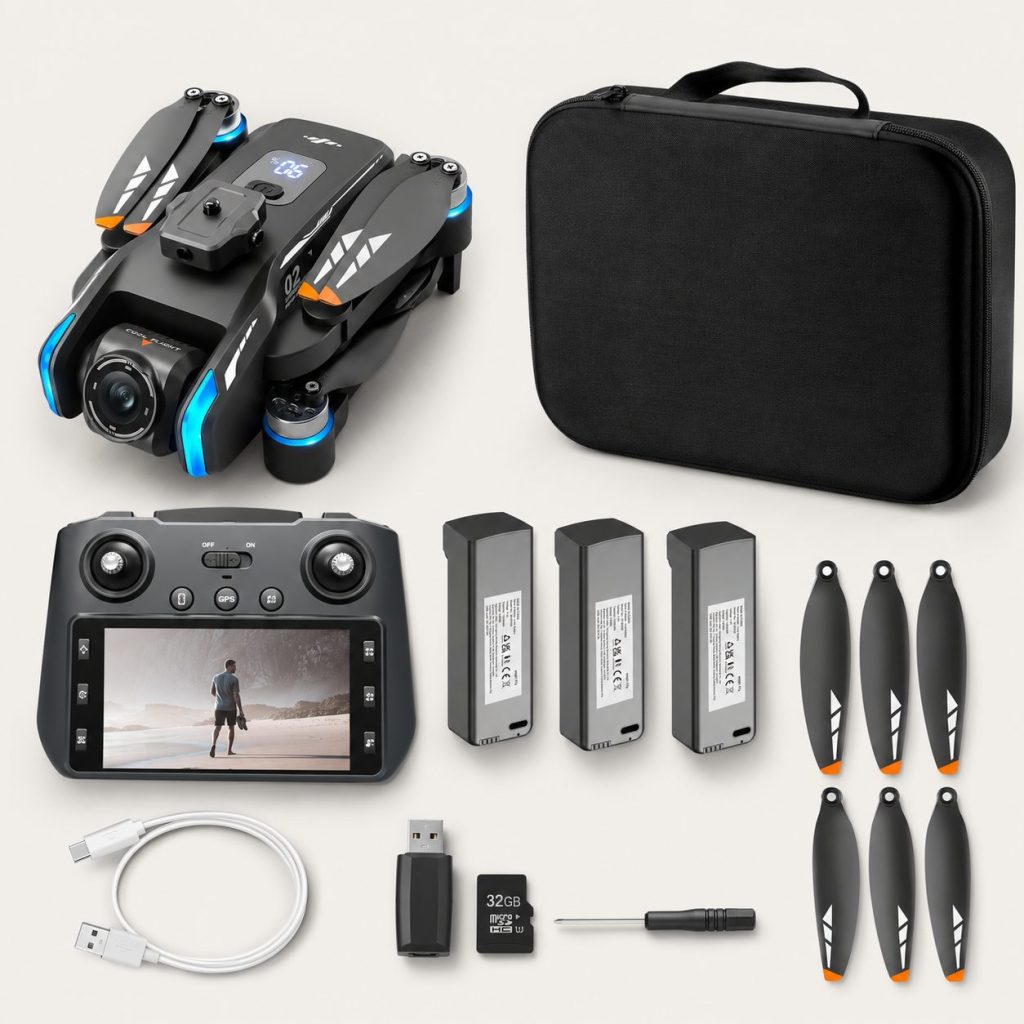
- Folded drone: Use a fitted compartment so the arms and camera are not pressed against other items.
- Screen remote: Protect the display and joysticks from pressure inside the bag.
- Two or three batteries: Select the package based on the number of locations planned for the day.
- Charging cable and approved charging equipment: Confirm the connector before leaving home.
- Memory storage: Verify whether the selected drone and camera configuration requires a card and which capacity is supported.
- Spare propellers and tool: A minor propeller issue should not end the entire trip.
- Lens cloth: Dust, fingerprints, sea spray, and moisture can reduce image clarity.
- Protective case: Keep the aircraft, remote, batteries, and accessories separated from clothing and metal objects.
Battery transport and charging requirements can vary by airline, carrier, destination, and battery specification. Confirm the current carrier rules before travel and protect battery terminals from contact with loose metal objects.
What These Beginner Travel Drones Will Not Replace
These models are designed for beginner-friendly aerial footage and recreational outdoor use. They should not be treated as replacements for every camera used in a travel vlog.
- They do not replace a handheld vlog camera: The drone records aerial context, not close conversational footage or indoor narration.
- They are not confirmed autonomous follow cameras: Do not assume subject tracking, follow-me behavior, or hands-free filming unless the selected model explicitly confirms it.
- They are not weatherproof production aircraft: Avoid rain, heavy wind, salt spray, and conditions outside the product instructions.
- An adjustable lens is not a gimbal: Camera-angle range and mechanical stabilization solve different problems.
- EIS cannot correct every movement: Abrupt yaw, wind shake, fast stopping, and poor framing can still make clips unusable.
- Return-to-home is not a guarantee: It depends on supported positioning, settings, available battery power, environmental conditions, and correct pilot setup.
The best use is to combine short aerial establishing shots with footage from a phone, action camera, or handheld camera. The drone adds scale and location; it does not need to record every part of the story.
Frequently Asked Questions About Travel and Vlogging Drones
S-X1 is the strongest fit when smoother vlog footage is the priority because its confirmed specifications include 4K at 50 fps, a 3-axis gimbal, and EIS. GT6 is the more balanced travel choice for buyers who want a lighter 209g aircraft, a 5.64-inch screen remote, GPS support, EIS, and approximately 25 minutes of listed flight time at a lower starting price.
Yes. A screen remote gives the pilot a dedicated live view without depending on a phone for the main flight display. This can be convenient while traveling because the phone remains available for maps, communication, handheld recording, and trip information. The tradeoff is that a larger screen remote takes more room in the bag.
A 3-axis gimbal is not required for every travel clip, but it is valuable when smooth aerial footage is an important part of the finished vlog. EIS can help reduce electronic shake, while an adjustable camera angle improves framing. A 3-axis gimbal, EIS, and an adjustable lens are different features and should not be treated as interchangeable.
Two batteries are a practical starting point for a day trip, while three batteries provide more room for multiple locations and repeated takes. Actual flight time varies with wind, temperature, battery condition, climbing, speed, camera use, and flight style. Confirm the battery package and current transport rules before traveling.
No. Aircraft weight does not provide permission to fly at every destination. Airspace restrictions, local rules, private-property requirements, crowds, airports, parks, and the purpose of the flight may affect where and how a drone can be operated. Check the current rules for the exact destination before flying.
For most beginner travel vlogs, better stabilization and confident nearby framing are more useful than maximum listed range. Establishing shots, reveals, road views, and landscape clips can usually be recorded close enough for clear visual awareness. Long listed range does not improve footage if the drone is difficult to frame or the camera movement is unstable.
The Bottom Line
The best drone for travel and vlogging is the model that matches the footage you plan to bring home. Choose S-X1 when smoother 4K video and a 3-axis gimbal justify the higher starting price. Choose GT6 for the strongest balance of lower weight, EIS, screen-remote convenience, GPS support, and listed flight time. Choose AE20 Max for flexible camera angles, XT808 for the largest controller display, or XT606 for a lower-cost GPS starting point. Do not choose only by maximum range or the biggest camera label. For travel creators, stable nearby footage, reliable framing, practical batteries, and a kit you will actually carry are usually more valuable.